Posts

How to Do Ocean Breath (Ujjayi Pranayama) in Yoga Proper Form, Variations, and Common Mistakes
Image
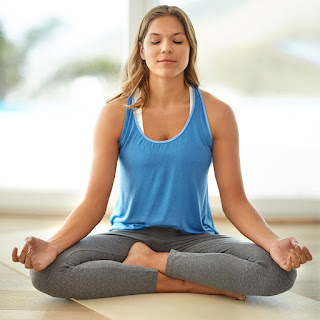
  Also Known As: Hissing Breath, Victorious Breath, Darth Vader Breath Targets: Breathing Level: Beginner Ocean Breath (Ujjayi Pranayama) is most often used in support of yoga postures, especially in the vinyasa style. In this breathing technique, you constrict the back of the throat to support lengthening each breath cycle. Each inhalation and exhalation is long, full, deep, and controlled. You can learn this breath while seated in a comfortable cross-legged position. Once you get the hang of it, begin to use it during your yoga practice. Benefits Ocean Breath concentrates and directs the breath, giving asana practice extra power and focus. It increases oxygen consumption. For instance, a clinical study from the Department of Neurophysiology at the National Institute of Mental Health and Neurosciences in Bangalore, India found ujjayi pranayama can increase your oxygen consumption during practice by about 50%.1 Practicing this breathing pattern also calms your body’s flight-or-flig...

How to Do Cooling Breath or Sitali Pranayama

Image
  In yoga, we talk a lot about stoking the internal fire (agni) through vigorous movements and directed breathing. But breathwork can also be used for the opposite effect: to calm and cool the body down. Though the exact origins of this technique are unknown, it is popular in  Kundalini yoga  and is regularly makes appearances in other types of yoga classes during the summer months. Sitali is also frequently prescribed in Ayurvedic medicine for people with fiery pitta constitutions.  While any long, slow, deep breathing helps to engage the parasympathetic nervous system and counter the effects of stress, sitali pranayama is particularly effective for cooling and soothing the body. To do sitali breath, you slowly sip air through a rolled tongue (or pursed lips for those who can't roll their tongues thanks to genetics). At the end of a vigorous, sweaty yoga session, it's just the thing to counter all that internal heat and bring your body back into ...

How to Do Alternate Nostril Breathing or Nadi Sodhana

Image
  Alternate nostril breathing may sound foreign to some but once you know how accessible it can be to incorporate this breathing technique into your routine you will reap the benefits of its calming effects. So how can you breathe out of one nostril at a time and why would you want to? By using your fingers to block off one nostril at a time as you breathe through the other, alternating your breath between nostrils in a regular pattern is balancing, relaxing, and calming, making nadi sodhana a very popular pranayama exercise. This method is traditionally thought to balance the two sides of your brain and to clear the nadis, which are energy channels that run along the base of the spine to the crown of the head. Western research is catching up with Eastern science and has confirmed this belief by showing that this breath can reduce blood pressure. If you are a little congested, expect this pranayama to move the mucus out so have some tissues handy. However, if you are too stuffed up...

How to Do Lion's Breath (Simha Pranayama) in Yoga

Image
  Lion's breath relieves tension and stress by stretching your entire face, including the jaw and tongue. Lion's breath will feel silly; it will introduce some ease and remind you not to take yoga too seriously. If you are getting overheated, try this breath to blow off some steam. Pranayama is a yogic practice that revolves around different breathing exercises. For all the time we spend stretching every other part of the body in yoga, it's remarkably rare to spend much time on the face, as lion's breath does. Also Known As: Simha pranayama, simhasana Targets: Face, throat, jaw, lungs Equipment Needed: None Level: Beginner Benefits of Lion's Breath All pranayamas help to relieve stress; some help to energize or calm the body. Studies suggest that regular practice of pranayama can actually help to relieve some of the symptoms of asthma, depression, and anxiety.1 You can practice lion's breath first thing in the morning to warm you up and increase your energy. Thi...

Sama Vritti Pranayama for Reducing Stress

Image
  According to the California College of Ayurveda, "Pranayama, the yogic art of breathing, comes from the Sanskrit root words prana and ayama. Prana means 'life force' and ayama means 'expansion, manifestation, or prolongation.' The practice of pranayama, therefore, is the practice of expanding our own prana so that it harmonizes with the universal prana." There are many forms of pranayama, including single nostril breathing, lion's breath, and breath of fire. Some of these techniques are quite advanced. Sama vritti, however, is a straightforward practice that anyone can learn. It focuses on the idea of "equal" breaths, meaning that inhalation lasts for the same amount of time as exhalation. Why Sama Vritti Is Calming Yoga has been studied from a medical perspective for many years. Studies find that breath-related yoga practices can calm your autonomic nervous system, naturally reducing stress hormones in the body. It also helps focus your mind a...

How to Do Three-Part Breath (Dirga Pranayama) in Yoga Proper Form, Variations, and Common Mistakes

Image
Targets: Breathing, focus Level: Beginner Three-Part Breath (Dirga Pranayama) is one of the most calming, grounding breathing exercises you can do. It really works to help focus your attention on the present moment and get in tune with the sensations of your physical body.1 For these reasons, it's often taught at the beginning of yoga classes as a way to transition students from their workaday lives into the time they have set aside for yoga. If you practice at home, it can work the same way. Do this pranayama when you first get on your mat to shake off your day and prepare yourself for practice. Benefits Deep breathing will help oxygenate your blood, nourishing your entire body. When you are under stress, your breath may be quick and shallow. Intentional breathing as in this practice will help calm you. Greater oxygen flow to the brain will help you become more focused and alert. This technique is taught to relieve stress and even to address panic attacks.2 You can use it throug...

Breathing exercise

Image
 
Image
 

SAMA VRITTI PRANAYAMA (BOX BREATH OR EQUAL BREATHING)

Many Yogis consider the breath to be a powerful and essential part of one’s yoga practice. When a yogi can control their breath, they can control their prana or life force energy, which governs all that they think, feel and do. One of the best breathing techniques you can use to create a calm and peaceful mind is Sama Vritti Pranayama. This is a simple but highly effective yoga breathing exercise that can be practiced by just about anyone at just about any time. Mastering this technique will help center your mind to improve your meditation and yoga. Practicing this breath also creates a foundation for learning the more advanced pranayamas. What is Sama Vritti Pranayama? Sama Vritti Pranayama is a yoga breathing exercise that is also known as the equal breath or box breathing. Sama means “equal”, and vritti means “mental fluctuations”, so Sama Vritti Pranayama translates as “equal mental fluctuation breathing”. Samavritti pranayama is a ratio breathing technique that uses a set length o...

UJJAYI PRANAYAMA

 How to practice Ujjayi breathing This pranayama is done through the nose, but it is helpful to begin practicing breathing through the mouth Begin in a comfortable seated position, such as Easy pose or Accomplished pose. Feel your spine long, and your chest open but have your body relaxed and your eyes soft or gently closed. Allow your jaw and your tongue to relax, and let your mouth drop open slightly. Inhale and exhale through your mouth, using deep diaphragmatic breathing. To make the ocean sound, whisper the syllable “h,” feeling the contraction in your throat. Keep this contraction engaged on the inhalation and exhalation. After a couple of breaths, try to close the mouth, breathing through the nose while still making the ocean sound in your throat. Work on creating a soothing and pleasing ocean sound and on increasing the length of your inhalation and exhalation. Do not strain or force the muscles in the neck. Gently and patiently explore and notice how to change the sound. U...

Diaphragmatic breathing technique

 Diaphragmatic breathing technique Here are the five steps involved in diaphragmatic breathing. You can practice this pranayama for 5-10 minutes 1-2 times per day. Sit in a stable and comfortable position with your spine straight and long. If seated on the floor, you can use a cushion or folded blanket under the back of the hips for support. If seated on a chair, make sure both feet are flat on the floor. Close your eyes or soften your gaze and take several deep breaths through your nose. Allow your body to relax and bring your awareness to your breath. Make sure there is no tension in the shoulders, neck or face. Put a hand on your upper chest and a hand on your stomach. Inhale slowly through your nose until you feel your stomach rise slightly against your hand. Exhale slowly and feel your stomach fall away from your hand towards your spine. Work towards having your breaths be slow and deep with only the stomach is moving. Try to keep the chest as still as possible. Continue with ...

the check list

Image
 

Today and Wednesday, ....and every Sunday and every Wednesday!!!

Image
 

Now on Sunday and Wednesday

Image
 

Today and Every Sunday at 7PM UTC+1 time

Image
 

How Mindfulness Changes Our Brain?

Image
 

Recommendation

 Here are some exercises that I recommend you do every day Deep abdominal breathing is one of the best techniques for reducing stress levels. Works before exams and other stressful situations. If performed daily for a minimum of 10 minutes, it helps to lower blood pressure and heart rate. 1. Sit on the floor with your spine straight, one hand on your chest, the other on your stomach. 2. Begin to inhale air through your nose and exhale through your mouth. You can feel the hand on your stomach go up and down, as opposed to the hand on your breast that doesn't move significantly. 3. Try to inhale as much air as you breathe in (to get as much oxygen as possible) and continue to slowly count as you exhale. II. Vritti alone, equal breathing exercise - this technique of balanced breathing should be practiced daily at bedtime. It frees the mind from racing thoughts, calms down and improves sleep quality. 1. Sit comfortably with your spine straight. 2. Start inhaling through your nose from ...

BREATHING EXERCISES IN WESTERN PSYCHOLOGY

 BREATHING EXERCISES IN WESTERN PSYCHOLOGY According to many psychological and clinical studies, diaphragmatic breathing in alternative and integrative medicine is an effective relaxation technique whose positive effects include physical and mental health. It is an effective non-pharmacological treatment that improves the emotional state, e.g. by reducing anxiety, depression and stress, it also has a positive effect on insomnia. Breathing exercises are widely used in the clinical treatment of mental illnesses such as PTSD, movement disorders, phobias, and other stress-induced emotional disorders. They help people with mental problems such as anxiety and depression. Research shows that one-day breathing exercises can relieve emotional exhaustion and depersonalization from burnout. Exercises consisting of 30 (breathing) sessions lasting 5 minutes a day can significantly reduce anxiety in pregnant women at risk of premature birth. Moreover, a similar effect on anxiety was seen in a th...

Grounding techniques: a step-by-step guide and methods

 Grounding techniques: a step-by-step guide and methods Grounding techniques are strategies that can help manage both of your traumatic memories or multiple emotions. The goal of grounding techniques is to allow both of you to move away from the negative. Introduction to grounding Place your feet firmly on the ground. 1. Enter the date and time. 2. Take slow, deep breaths. 3. Say what they can observe in their current environment. 4. Remind yourself that they are in a safe place now. 5. Observe their immediate surroundings and describe objects in the room or surroundings. To reduce the intensity of their feelings, a person may use visualization exercises or sense diffusers. Some techniques include: visualizing silencing the emotional shield clenching your fists to hold on to your feelings, and then letting go of your fists when they let go visualizing a safe place with an imaging guide distracting myself Distracting from past memories may involve trying different strategies. Here a...
Image